Hotel Guest Experience Optimization Guide
Optimize hotel guest experience with occupancy sensors through automated comfort control, seamless service delivery, and personalized room environments.
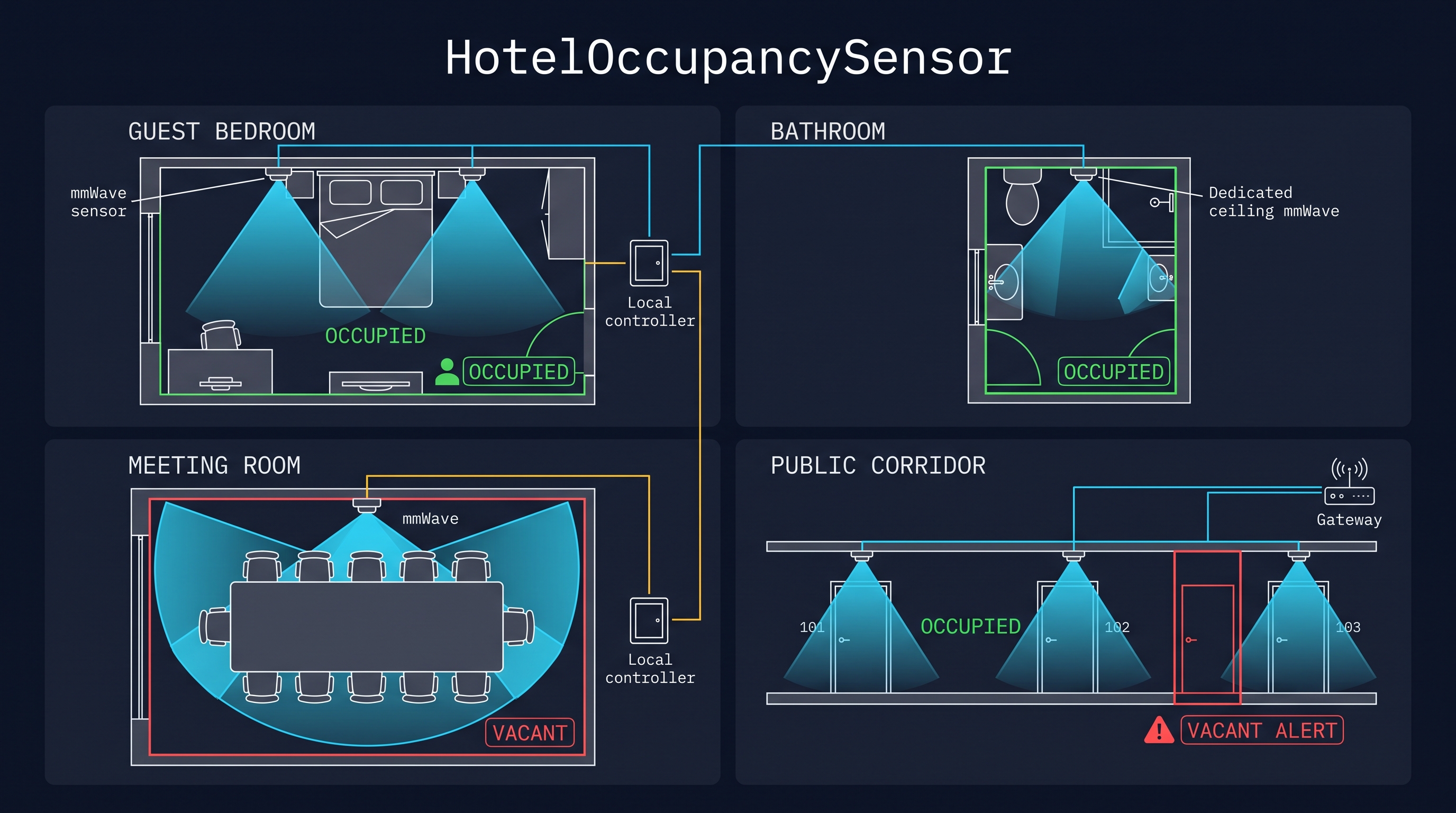
Hotel guest experience optimization with occupancy sensors represents the convergence of sustainability initiatives and hospitality excellence. Modern travelers increasingly expect both environmental responsibility and personalized comfort, creating a challenge for hotel operators who must balance guest satisfaction with operational efficiency. Occupancy sensors, particularly mmWave technology that detects stationary humans including sleeping guests, enable automated room environments that respond to actual guest presence rather than arbitrary schedules. This technology delivers consistent comfort, reduces service disruptions, and enables personalized experiences while simultaneously achieving 20-40% energy savings. The most successful implementations treat occupancy sensors as guest experience enhancement tools rather than merely energy-saving devices, positioning sustainability as a guest benefit rather than a operational constraint.
The Foundation: Accurate Occupancy Detection
Accurate occupancy detection forms the foundation of guest experience optimization. Traditional systems rely on keycard switches or motion sensors that provide incomplete or inaccurate room status information. Keycard switches indicate when a guest has left the room but cannot detect if the guest has returned without reinserting the keycard, leading to false unoccupied readings. Motion sensors fail to detect stationary guests who may be reading, watching television, or sleeping, resulting in premature setback of room conditions and guest discomfort. These limitations create a fundamental tension between energy efficiency and guest comfort that occupancy sensors resolve through true presence detection.
mmWave occupancy sensors overcome these limitations by detecting micro-motion such as breathing and heartbeat, enabling accurate detection of stationary humans. The technology uses 24-60 GHz millimeter-wave radar to penetrate furniture and bedding, detecting presence even when guests are motionless. Detection accuracy exceeds 99% for stationary humans under controlled testing conditions, ensuring reliable room status determination. This accuracy enables automated systems to maintain comfort conditions whenever guests are actually present, regardless of their activity level. Guests enjoy consistent temperatures without manual thermostat adjustments, while properties achieve energy savings during genuinely unoccupied periods.
The placement and configuration of occupancy sensors significantly impacts guest experience. Sensors should be positioned to provide comprehensive room coverage while avoiding false triggers from movement in adjacent spaces. Ceiling-mounted sensors typically provide the most reliable coverage for guest rooms, with detection patterns designed to cover beds, seating areas, and bathrooms. Door sensors provide additional occupancy confirmation by detecting entry and exit events. Advanced systems use multi-sensor fusion, combining mmWave detection with door status and other inputs to make intelligent occupancy determinations. Proper sensor configuration ensures accurate detection without false positives that could trigger unnecessary energy consumption or false negatives that could compromise guest comfort.
Automated Comfort Control: Consistency Without Disruption
Automated comfort control represents the most visible guest experience benefit of occupancy sensors. Traditional hotel HVAC systems rely on fixed schedules or manual adjustments that create temperature inconsistencies. Rooms may be too cold upon arrival after extended setback periods, or too warm if setback failed to activate properly. Manual thermostat adjustments by guests often result in extreme setpoints that waste energy without improving comfort. Housekeeping staff may adjust thermostats during cleaning, inadvertently creating guest discomfort upon return. These inconsistencies create negative guest experiences that impact satisfaction scores and repeat business.
Occupancy sensors enable seamless automated comfort control that maintains optimal conditions without guest intervention. When guests are present, systems maintain comfort setpoints typically between 20-24°C depending on guest preferences and property standards. When rooms are unoccupied, systems transition to setback temperatures (26-28°C for cooling, 18-20°C for heating) that reduce energy consumption while preventing moisture damage and maintaining reasonable pre-conditioning capability. The most sophisticated systems implement predictive control that begins conditioning rooms shortly before expected guest arrival based on reservation data, ensuring rooms are comfortable upon arrival without wasting energy on extended pre-conditioning.
The transition between occupied and unoccupied modes occurs seamlessly without guest awareness. Advanced systems use gradual temperature adjustments rather than abrupt setpoint changes to avoid noticeable temperature fluctuations. The system maintains minimum airflow during unoccupied periods to preserve air quality and prevent stuffiness upon guest return. Humidity control continues during setback periods to prevent mold growth and maintain guest comfort. These refined control strategies ensure that energy savings never come at the expense of guest comfort. Guests simply enjoy consistently comfortable rooms without understanding the complex automation operating behind the scenes.
Seamless Service Delivery: Housekeeping and Maintenance Coordination
Occupancy sensors transform housekeeping and maintenance operations from disruptive intrusions to seamless services. Traditional housekeeping relies on manual room status determination, with attendants knocking on doors or checking keycard status to identify occupied rooms. This approach creates uncertainty—attendants may interrupt guests who are resting, or delay cleaning of vacant rooms that could be turned over faster for arriving guests. The result is operational inefficiency and potential guest dissatisfaction from unnecessary disturbances or delayed room readiness.
Real-time occupancy detection enables intelligent housekeeping coordination. Housekeeping management systems receive continuous room status updates, allowing optimized attendant routing based on actual occupancy rather than assumptions. Rooms that have been vacant for extended periods receive priority for cleaning to accelerate turnover for arriving guests. Occupied rooms are automatically excluded from cleaning assignments unless specific service requests are made. The system can distinguish between different occupancy states—guest present, guest temporarily absent, guest departed—to apply appropriate service protocols. This intelligence reduces guest disturbances by 60-80% while improving housekeeping efficiency by 20-30%.
Maintenance operations benefit similarly from occupancy awareness. HVAC maintenance can be scheduled during unoccupied periods to avoid guest disruption. Preventive maintenance alerts can be prioritized based on room occupancy status, with urgent issues in occupied rooms receiving immediate attention while non-urgent issues in vacant rooms are deferred. The system can even implement temporary control strategies to maintain guest comfort during maintenance emergencies, such as switching to backup equipment or adjusting setpoints. This proactive approach reduces guest complaints about maintenance issues by 40-60% while improving maintenance staff productivity through better scheduling and prioritization.
Personalized Room Environments: Guest Preference Integration
The most advanced occupancy sensor implementations enable personalized room environments that adapt to individual guest preferences. Guest loyalty programs increasingly include preference data such as preferred temperature, lighting levels, and pillow types. Occupancy sensors provide the occupancy detection foundation needed to apply these preferences automatically. When a returning guest arrives, the system automatically adjusts room conditions to their stored preferences without requiring manual requests. This personalization creates a welcoming experience that demonstrates attention to individual needs and enhances loyalty.
Preference integration extends beyond temperature to comprehensive room environments. Lighting preferences can be applied automatically, with guests who prefer brighter environments receiving higher illumination levels while those who prefer dimmer conditions receive lower levels. Window shade positions can be adjusted based on preferences for natural light. Even entertainment system settings can be personalized, with preferred channels or volume levels applied automatically. The combination of occupancy detection and preference data creates a truly personalized room experience that adapts to each guest without requiring explicit requests.
The implementation of personalized environments requires careful attention to privacy and data security. Guests must provide explicit consent for preference storage and automated application. Data must be securely stored and only used for the intended purpose of enhancing the guest experience. Properties should provide clear communication about how preference data is used and maintain robust security measures to protect guest information. When implemented ethically and transparently, personalized environments significantly enhance guest satisfaction and loyalty while respecting privacy concerns.
Enhanced Safety and Security Applications
Occupancy sensors contribute to guest safety and security beyond comfort and service delivery. Emergency response systems benefit from real-time occupancy data, enabling first responders to quickly identify which rooms are occupied during evacuation scenarios. Fire alarm systems can use occupancy data to prioritize evacuation of occupied areas and identify guests who may need assistance. Security systems can detect unusual occupancy patterns that may indicate security concerns, such as extended occupancy in normally vacant areas or occupancy in restricted areas.
Guest safety is enhanced through automated response to emergency conditions. In the event of a fire alarm, occupancy sensors can automatically unlock doors in occupied areas to facilitate evacuation while maintaining security in vacant areas. Emergency lighting can be activated in occupied rooms to guide guests to exits. The system can even provide first responders with real-time occupancy maps showing which rooms are occupied and where guests may be located. These capabilities significantly improve emergency response effectiveness and guest safety during critical situations.
Daily safety applications include bathroom occupancy monitoring for elderly or accessibility-impaired guests. Extended occupancy in bathrooms can trigger discreet wellness checks by staff, potentially identifying medical emergencies before they become critical. The system can also detect falls or unusual lack of motion patterns that may indicate a guest needs assistance. These safety applications require careful implementation to respect guest privacy while providing appropriate security and safety benefits. When implemented thoughtfully, occupancy sensors enhance overall guest safety without creating intrusive surveillance.
Technology Integration: Creating Cohesive Guest Experiences
Occupancy sensors achieve maximum guest experience impact when integrated with other hotel technologies to create cohesive experiences. Property management systems (PMS) integration enables reservation-based automation, with rooms pre-conditioned based on arrival times and preferences automatically applied from guest profiles. Door lock integration provides enhanced occupancy confirmation and enables keycard-based preference recall. Mobile app integration allows guests to control room environments remotely while the system maintains occupancy-based optimization. Lighting control integration enables comprehensive room automation beyond HVAC to include lighting, shades, and entertainment systems.
The integration architecture should be designed with guest experience as the primary goal rather than technical convenience. Systems should respond quickly to occupancy changes to maintain comfort without noticeable delays. Redundancy and fail-safe mechanisms ensure that guest comfort is never compromised by system failures. Guest override options must remain available at all times, allowing guests to maintain control over their environment. The technology should be invisible in its operation—guests should experience the benefits without understanding the complex integration operating behind the scenes.
Staff interfaces play a crucial role in the guest experience. Front desk staff need visibility into room status for check-in/check-out coordination and guest communication. Housekeeping managers need real-time occupancy data for routing and scheduling. Engineering teams need performance monitoring and maintenance alerts. These staff interfaces should be intuitive and reliable, enabling staff to use the system effectively without extensive training. When staff can leverage occupancy data effectively, the guest experience benefits multiply through improved service delivery and operational efficiency.
Overcoming Implementation Challenges
Implementing occupancy sensors for guest experience optimization faces several challenges that require proactive management. Guest acceptance represents the primary concern—some guests may perceive automated systems as intrusive or as reducing their control over their environment. Mitigation strategies include clear guest communication about the benefits, reliable override options, and conservative initial setpoints that prioritize comfort over maximum optimization. Train front desk staff to explain the system and handle guest questions or concerns. Consider guest satisfaction surveys to monitor acceptance and refine the guest experience.
Technical reliability is critical for guest experience applications. System failures that cause discomfort or inconvenience create negative guest experiences that outweigh the benefits. Implement redundant systems where critical, particularly for primary guest comfort functions. Establish rapid response procedures for addressing system issues to minimize guest impact. Regular maintenance and proactive monitoring prevent failures before they affect guests. The reliability requirements for guest experience applications are higher than for pure energy savings applications, justifying additional investment in robust design and maintenance.
Staff adoption and workflow integration represent another implementation challenge. Housekeeping teams must adjust to new routing based on occupancy data rather than manual room checks. Engineering teams need new procedures for occupancy-aware maintenance. Front desk teams need training on guest communication and system status monitoring. Address these challenges through comprehensive training, clear documentation, and involving staff in the planning process. Identify champions within each department who can advocate for the system and support their colleagues. Successful implementation requires treating the human elements as carefully as the technical elements.
Measuring Guest Experience Impact
Measuring the guest experience impact of occupancy sensors requires both quantitative and qualitative metrics. Quantitative metrics include guest satisfaction scores specifically related to room comfort, temperature consistency, and service responsiveness. Track complaint rates about temperature, housekeeping disturbances, and maintenance issues. Monitor repeat booking rates and loyalty program engagement as indicators of overall satisfaction. These metrics provide objective evidence of guest experience improvement from occupancy sensor implementation.
Qualitative assessment includes guest feedback through comment cards, online reviews, and direct conversations. Analyze reviews for mentions of room comfort, temperature consistency, and service quality. Conduct focus groups with frequent guests to understand their perception of the automated systems. Monitor social media and online travel platforms for guest comments about room environment and service. This qualitative feedback provides insights into the guest experience that quantitative metrics may miss.
Operational metrics also reflect guest experience impact. Reduced housekeeping disturbances correlate with improved guest satisfaction. Faster room turnover times improve readiness for arriving guests. Reduced maintenance complaints indicate improved equipment reliability. These operational improvements ultimately translate to better guest experiences even when not directly measured. The most comprehensive assessment combines guest-facing metrics with operational metrics to provide a complete picture of guest experience impact.
Best Practices for Guest Experience-Focused Implementation
Successful guest experience optimization with occupancy sensors follows several best practices. Begin with guest experience requirements rather than energy savings goals. Identify the specific guest pain points that occupancy sensors can address—temperature inconsistency, housekeeping disturbances, maintenance disruptions. Design the system to solve these problems first, with energy savings as a secondary benefit. This guest-centric approach ensures the system delivers meaningful guest experience improvements rather than just operational efficiency.
Implement comprehensive guest communication strategies. Provide in-room information explaining the automated systems and their benefits. Train front desk staff to answer guest questions and address concerns. Consider guest-facing mobile apps that provide visibility and control over room environments. The more guests understand the system and its benefits, the more accepting they will be. Transparency builds trust and reduces skepticism about automated systems.
Maintain guest control as a fundamental principle. Override options must be readily available and reliable. Guests should never feel trapped by automated systems they cannot control. The system should enhance guest control rather than replace it. When guests understand they maintain ultimate control while enjoying the benefits of automation, acceptance increases significantly. The balance between automation and manual control is crucial for guest experience success.
Future Trends in Guest Experience Automation
The future of guest experience automation with occupancy sensors lies in increasingly sophisticated personalization and seamless integration. Artificial intelligence will enable systems to learn individual guest preferences and anticipate needs automatically. Predictive analytics will optimize room environments based on guest behavior patterns, reservation data, and even weather forecasts. Voice control and natural language interfaces will make interaction with room automation more intuitive. These advances will further blur the line between automated and manual control, creating environments that adapt to guests without requiring explicit requests.
Integration with broader smart building ecosystems will enhance guest experience through coordinated automation across systems. Lighting, shades, entertainment, and even room service will respond to occupancy and guest preferences in coordinated ways. The hotel room will become an intelligent environment that anticipates and fulfills guest needs seamlessly. This coordination will extend beyond individual rooms to property-wide optimization, with lobby, conference, and recreational spaces also benefiting from occupancy-aware automation.
Sustainability will become increasingly integrated with guest experience rather than positioned as a trade-off. Guests will expect both environmental responsibility and personalized comfort, with advanced automation making this combination possible. Energy savings will be achieved through sophisticated optimization rather than noticeable sacrifice. The most successful properties will position sustainability as a guest experience enhancement—cleaner air, more stable temperatures, quieter operation—rather than a constraint on comfort.
Conclusion: Balancing Automation and Hospitality
Hotel guest experience optimization with occupancy sensors represents the future of hospitality where technology enhances rather than replaces human service. The most successful implementations treat occupancy sensors as tools for elevating guest experiences rather than merely reducing energy consumption. By focusing on guest comfort, seamless service, personalization, and safety, properties can achieve both sustainability goals and competitive differentiation. The technical foundation of accurate occupancy detection enables these guest experience benefits while simultaneously delivering significant energy savings.
The implementation journey requires careful attention to guest acceptance, technical reliability, staff adoption, and continuous measurement. Properties that approach implementation with guest experience as the primary objective achieve the best results. The balance between automation and human touch remains crucial—technology should enhance hospitality rather than replace it. When implemented thoughtfully, occupancy sensors create win-win outcomes where guests enjoy superior experiences and properties achieve operational efficiency and sustainability goals.
As guest expectations continue evolving toward both personalized service and environmental responsibility, occupancy sensors will become increasingly essential for competitive hospitality properties. The technology that once seemed futuristic is now proven and cost-effective, with typical ROI of 6-18 months. The properties that embrace guest experience optimization with occupancy sensors today will be positioned for long-term success in an increasingly competitive and sustainability-conscious market.
Not sure which sensor fits your project?
Talk to our mmWave application engineers for a free consultation.
Find the right presence sensor for your hotel project
Compare the 3 protocols, check hotel-specific case studies, and download the installation guide
Related products
1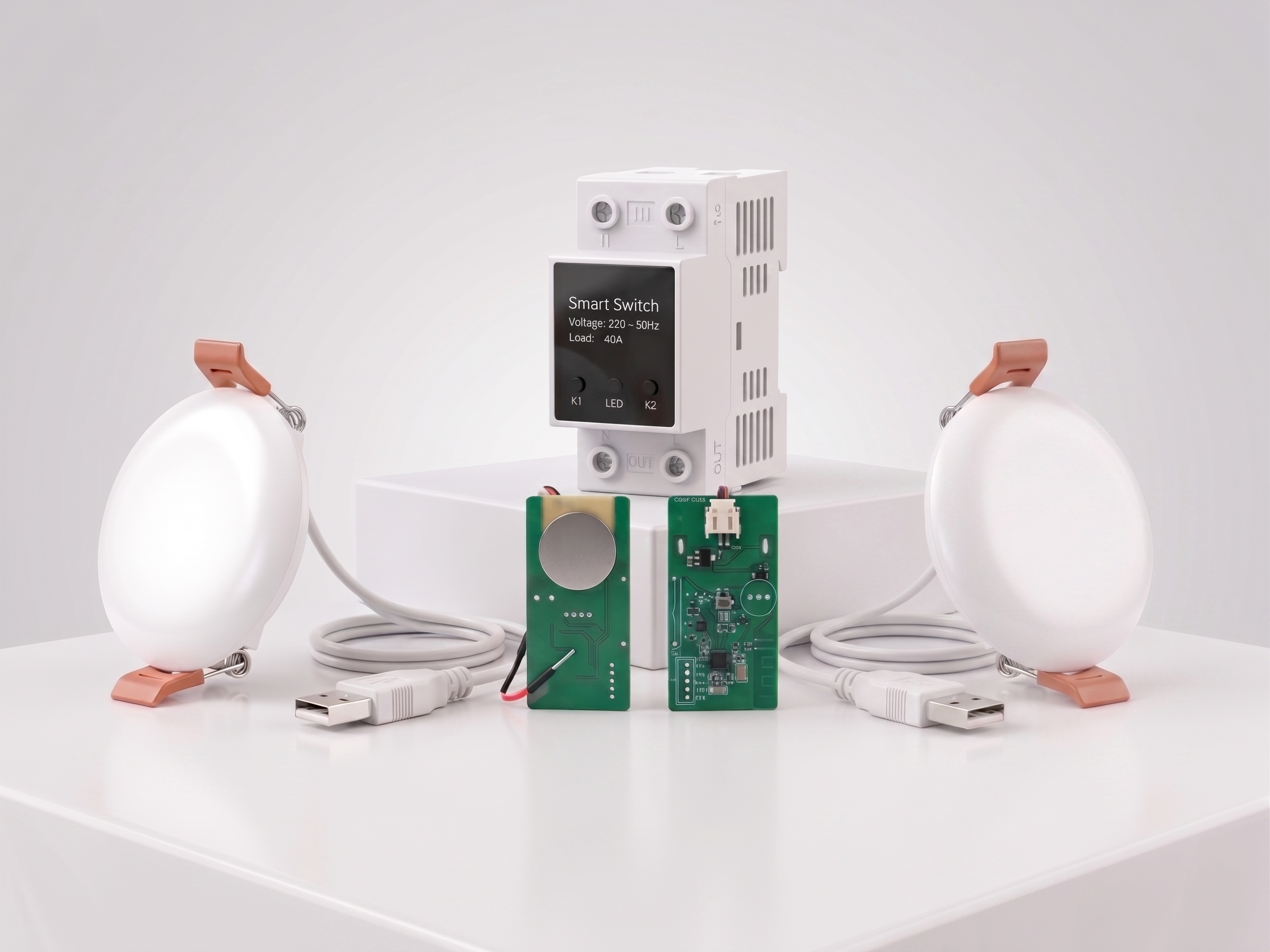
Hotel Energy Saving Control Kit — Dual mmWave Sensors, Door Sensor & Controller
A three-piece hotel energy saving control kit combines ceiling mmWave occupancy sensors for the bedroom and bathroom, an embedded door magnetic contact sensor, and a local central controller. Zero PMS and zero cloud: reduce HVAC and lighting waste with true occupancy detection.
This page already points to it as the next recommended reference.
Related solutions
3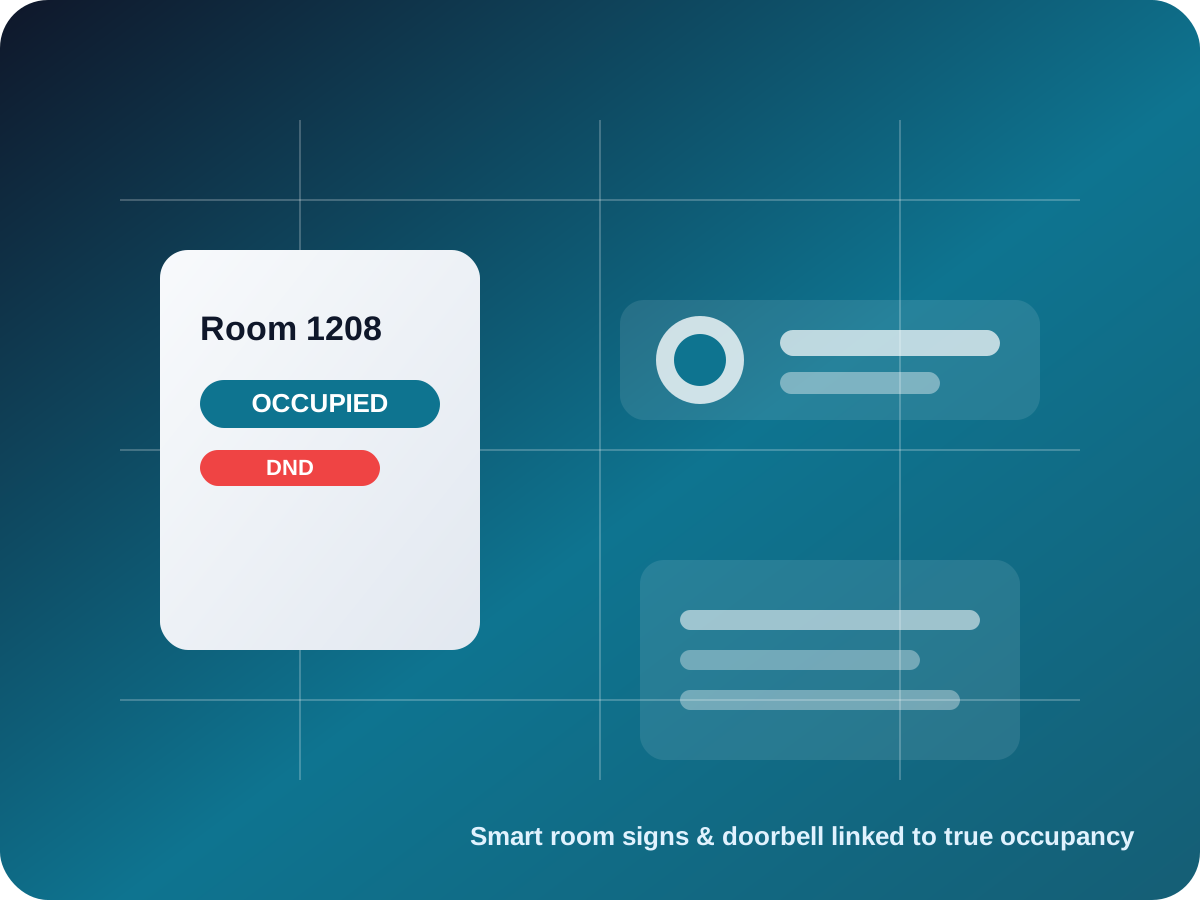
Hotel Energy Management — Occupancy Sensor HVAC & Lighting Control
Hotel energy management that uses an occupancy sensor to drive HVAC and lighting setback the moment a guest leaves. Our energy management system for hotels cuts room energy cost 20-40% with true occupancy detection.
It supports the same product context: Hotel Energy Saving Control Kit — Dual mmWave Sensors, Door Sensor & Controller, hotel-room-occupancy-sensor.
Hotel Housekeeping Electronic DND System — Room Status Indicator
A hotel housekeeping electronic DND system links mmWave occupancy and a door sensor to show live room status. Our hotel do not disturb system replaces physical tags with true occupancy-driven room status signs.
It supports the same product context: hotel-room-occupancy-sensor.
Hotel Room Occupancy System — Intelligent Room Occupancy Management
A hotel room occupancy system that turns mmWave radar presence into live room status, housekeeping signals, and HVAC energy saving. Our intelligent room occupancy system manages guest rooms from one mmWave sensor mesh.
It supports the same product context: hotel-room-occupancy-sensor, Hotel Energy Saving Control Kit — Dual mmWave Sensors, Door Sensor & Controller.
Related blog posts
3
Hotel Energy Savings vs Consumption Analysis
Compare hotel energy consumption patterns with achievable savings through occupancy-based automation and smart HVAC control systems for hotels.
It supports the same product context: Hotel Energy Saving Control Kit — Dual mmWave Sensors, Door Sensor & Controller, ceiling-mmwave-occupancy-sensor, hotel-room-occupancy-sensor.
Hotel Occupancy Sensor ROI Calculator Guide
Calculate hotel occupancy sensor ROI including energy savings, implementation costs, payback periods, and total cost of ownership analysis for hotels.
It supports the same product context: Hotel Energy Saving Control Kit — Dual mmWave Sensors, Door Sensor & Controller, ceiling-mmwave-occupancy-sensor, hotel-room-occupancy-sensor.
Inncom vs Honeywell Thermostat Comparison
Compare Inncom and Honeywell hotel thermostat systems across functionality, integration capabilities, cost structure, and suitability for hotel properties.
It supports the same product context: Hotel Energy Saving Control Kit — Dual mmWave Sensors, Door Sensor & Controller, ceiling-mmwave-occupancy-sensor.
Specify your hotel project with our engineers
Send your room count, ceiling type, and protocol preference. We will return a sample plan and quote within 24 business hours.
- Move from general guidance into a product or application discussion.
- Use RFQ when pricing, drawings, MOQ, or launch timing needs structure.
- Keep a direct contact path visible for fast clarifications and handoff.