IoT in Hospitality: How mmWave Occupancy Sensors Fit the Stack
IoT in hospitality turns room presence into automated comfort and savings. This guide covers how mmWave occupancy sensors become the sensing layer.
Prefer English? We will keep this page context and only switch if you want.
Practical guides on mmWave presence sensors — detection range, protocol choice, installation, and OEM/ODM terms for hotel and commercial projects.
IoT in hospitality turns room presence into automated comfort and savings. This guide covers how mmWave occupancy sensors become the sensing layer.
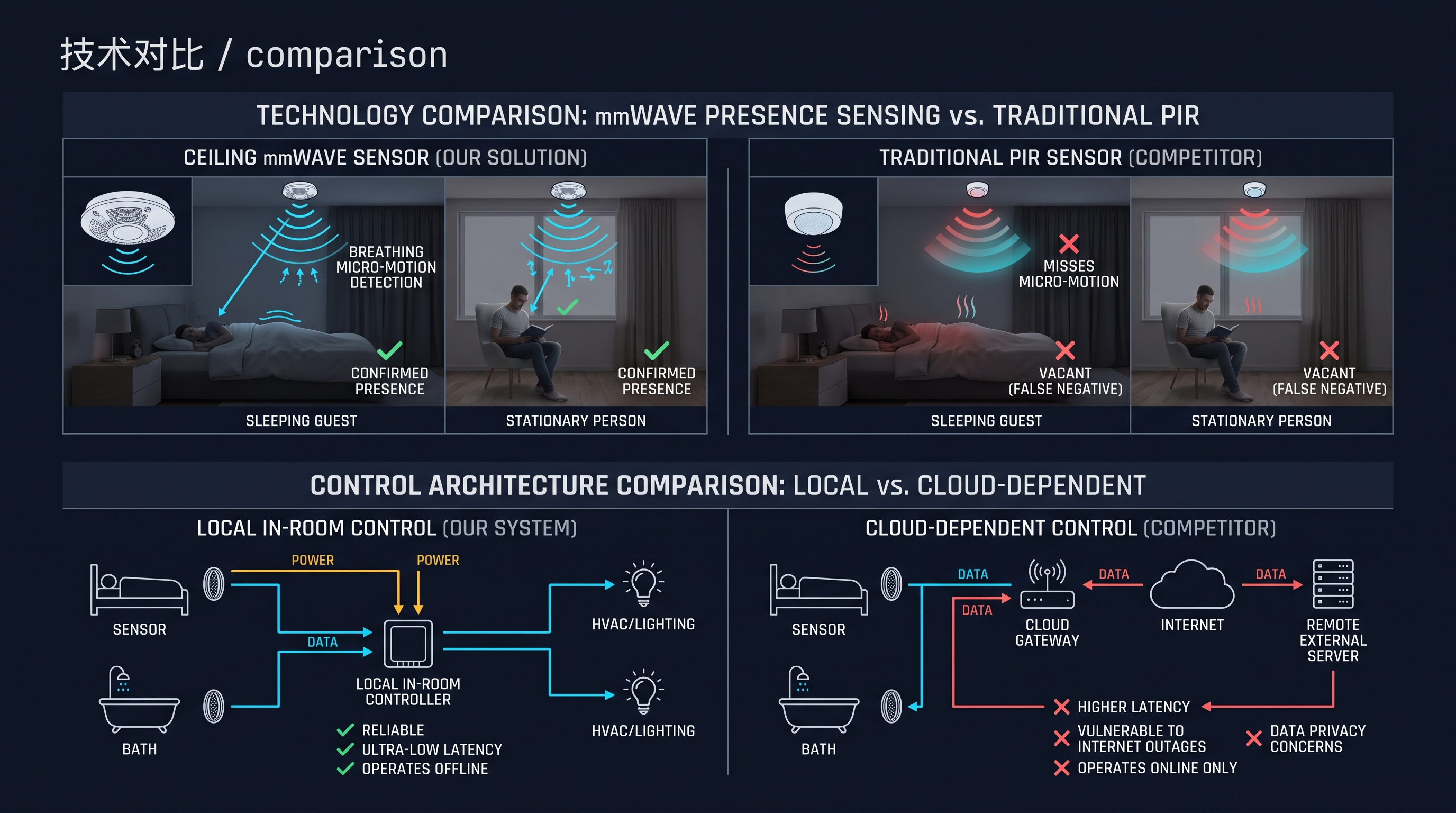
A microwave occupancy sensor uses narrowband 5.8GHz and triggers on fans and curtains. This guide shows why a mmWave occupancy sensor beats it on true presence.
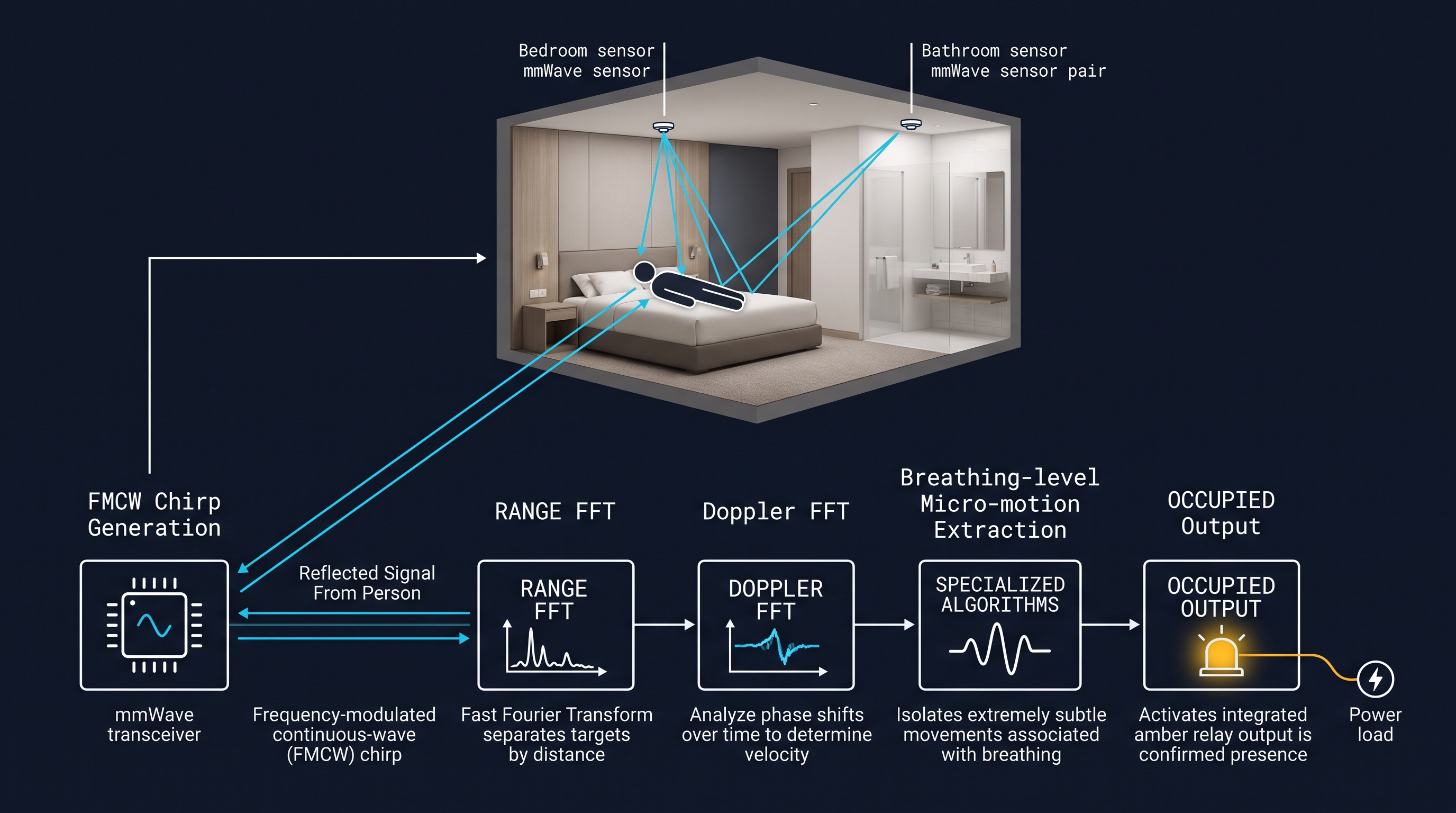
An mmWave occupancy sensor uses 24GHz or 60GHz wideband radar to detect micro-motion and breathing where PIR fails. This guide covers true room status and energy savings.
A mmWave vs PIR occupancy sensor comparison shows why mmWave radar detects a sleeping guest where PIR fails. This guide covers micro-motion and breathing.
A motion detector in hotel room must detect a sleeping guest, not just walking. This guide compares it to PIR and explains why mmWave wins on occupancy.
A motion sensor in hotel room must detect a sleeping guest, not just walking. This guide shows why mmWave radar beats PIR for true occupancy and energy saving.
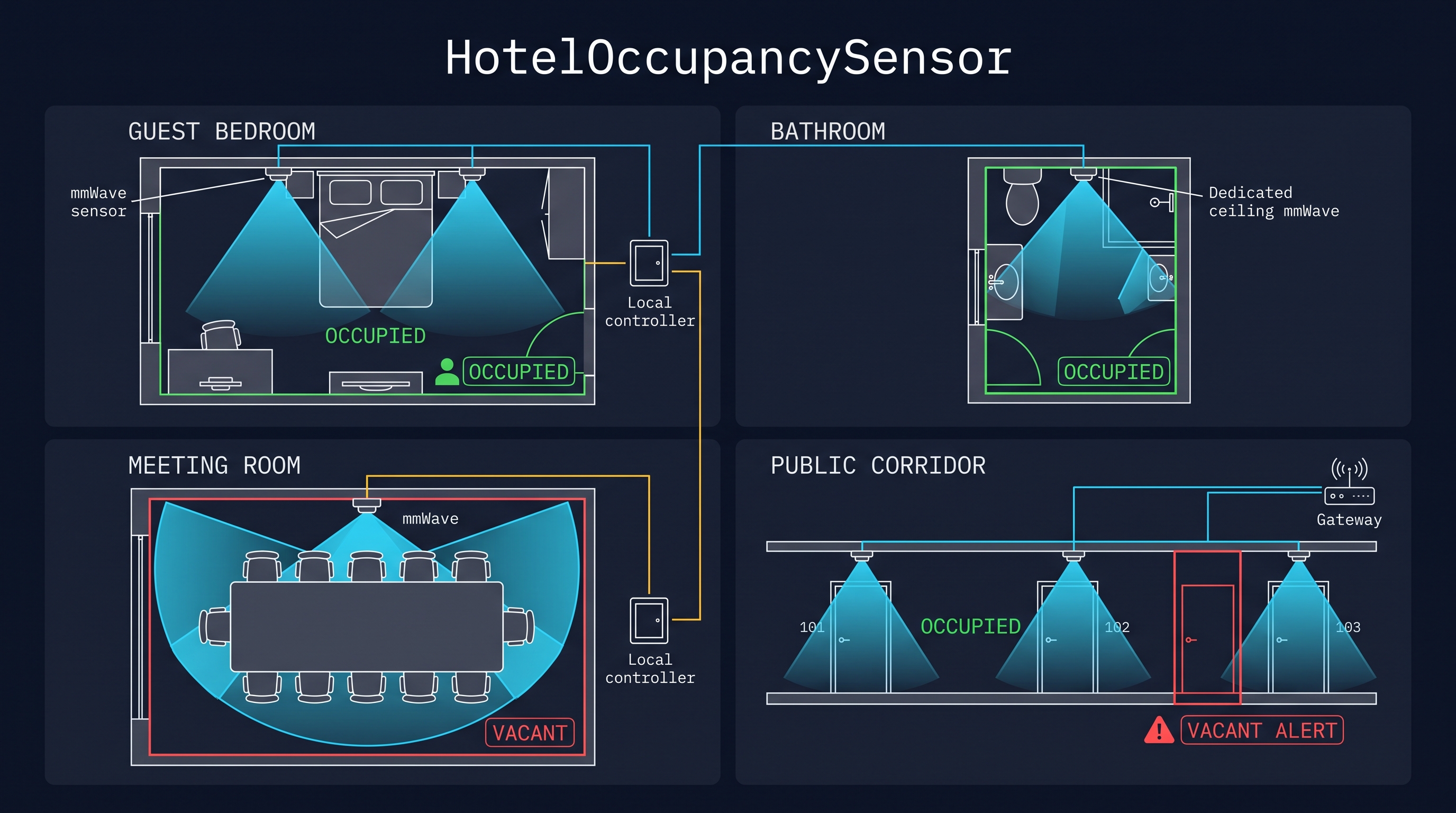
An occupancy sensor HVAC link triggers setback the moment a guest leaves, not after a timer. This guide covers how occupancy drives HVAC and lighting saving.
A presence sensor hotel solution using mmWave radar detects a sleeping guest, not just walking. This guide covers how a presence sensor hotel gives true status.
A room vacant sign that lights only when the room is truly vacant, not on a manual slide. This guide covers e-ink signs driven by an occupancy sensor and door.
Send your drawings, target quantity, and timeline. Our sales engineering team will respond within 24 business hours with a practical next step, a quote, or a sample plan.